inquiry@thecannabisboxes.com
Welcome To The Cannabis Boxes
 333 Texas Street, Suite 1300, Shreveport, Louisiana, 71101, USA
inquiry@thecannabisboxes.com
333 Texas Street, Suite 1300, Shreveport, Louisiana, 71101, USA
333 Texas Street, Suite 1300, Shreveport, Louisiana, 71101, USA
inquiry@thecannabisboxes.com
333 Texas Street, Suite 1300, Shreveport, Louisiana, 71101, USA
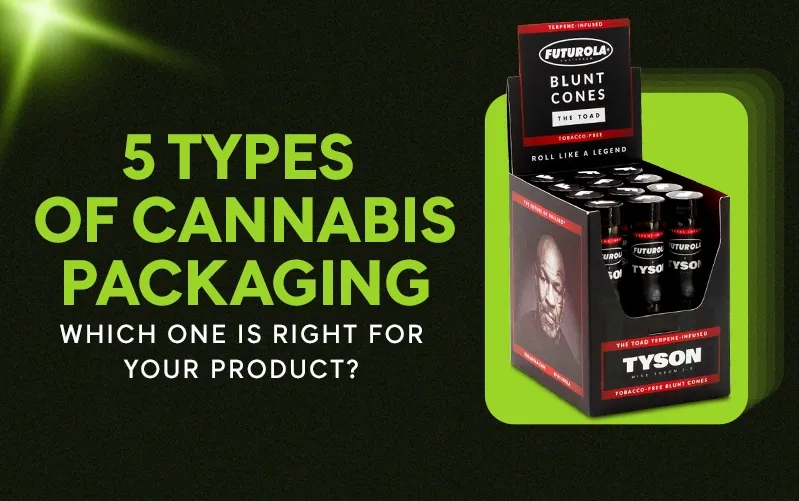
No matter what type of product you are selling in the market, packaging plays an imperative role in advertising your brand.
Cannabis product packaging differs from that of other products, as some products are not federally legal and each state has its own specific legalities and compliance requirements.
In this blog post, we will guide you through the most commonly used types of cannabis packaging and help you decide which one is right for your product. Keep reading!
For cannabis brands, child-resistant packaging has become a must-have, and definitely for a good reason. Child-resistant bags come with tight closures that are too difficult for kids to open, but for adults, there’s no issue opening them.
You can use these bags for different cannabis products like flower, edibles, and pre-rolls. The best part about these bags is that it is lightweight, which saves a lot on shipping costs and shelf space.
One downside of child-resistant bags is that they look basic. Hence, for those brands that want to go for premium or luxury packaging might make their decisions difficult.
Glass jars are a premium packaging option for luxury cannabis brands. They are perfect for cannabis products where freshness is a top priority because they protect products from light and air.
Customers love glass jars because they can easily see what they are going to buy. Plus, customers reuse jars at home, which promotes sustainability, and they keep remembering your brand for longer.
The con? Glass is heavier than other materials, so shipping costs might go up, and you risk breakage. Moreover, you need to ensure that your glass jar is child-resistant and has a lid.
The use of pre-rolls and vape cartridges is becoming popular, and tube packaging is especially designed for them. They protect delicate pre-rolls from getting crushed and keep them fresh until use.
Tubes are portable, compact, and easy to use for those customers who want convenient packaging. Many brands use tube packs to sell multiple pre-rolls in one pack, and this thing is liked by their customers.
The main concern about tube packaging is that they are only limited to pre-rolls and vape cartridges. You can’t use them for any type of cannabis product.
Sustainability has become a need for many industries, not just the cannabis industry. Nowadays, customers expect eco-friendly packaging not only because of personal choices but also to save the planet from harmful substances.
Packaging is not only about selling products, but it’s more than this. Sustainable cannabis packaging is of different types, like recycled paper, compostable, and biodegradable materials.
One challenge of this packaging is that it’s expensive, but cost doesn’t matter when the purpose is bigger. But the main issue is that eco-friendly packaging doesn’t provide better barrier protection than traditional packaging materials.
Tins give you that vintage, artisanal feel that some brands really lean into. They are durable, reusable, and offer excellent protection for your products. Metal blocks out light completely, which is great for preserving quality.
These work well for smaller quantities of flower, edibles, and concentrates. Customers love the tactile experience of opening a well-made tin, and they are likely to keep and reuse it.
The drawbacks? Tins are heavier than bags, which affects shipping costs. They are also generally more expensive upfront. But if you are targeting the premium market segment, that extra cost might be worth it for the perceived value.
Still thinking about which packaging type would be best for your brand? It all depends on your product type, target audience, and brand positioning. It’s not only about figuring out based on only one factor.
And the most important thing is always checking local regulations. Cannabis packaging should be in accordance with state laws and comply. It’s not mandatory to stick to only one type of packaging; test different types of cannabis packaging to get a long-term idea which works best for you.
The packaging delivered by The Cannabis Boxes USA is child-resistant, barrier-protected, and complies with local state laws.
5 Types of Cannabis Packaging: Which One Is Right for Your Product? Jan 10, 2026
Recyclable vs. Compostable: Which is Better for Cannabis Products? Dec 29, 2025

5 Festive Cannabis Packaging Trends Dominating Christmas Sales Dec 18, 2025

How Custom CBD Cosmetic Boxes Boost CBD Beauty Sales? Dec 06, 2025