inquiry@thecannabisboxes.com
Welcome To The Cannabis Boxes
 333 Texas Street, Suite 1300, Shreveport, Louisiana, 71101, USA
inquiry@thecannabisboxes.com
333 Texas Street, Suite 1300, Shreveport, Louisiana, 71101, USA
333 Texas Street, Suite 1300, Shreveport, Louisiana, 71101, USA
inquiry@thecannabisboxes.com
333 Texas Street, Suite 1300, Shreveport, Louisiana, 71101, USA
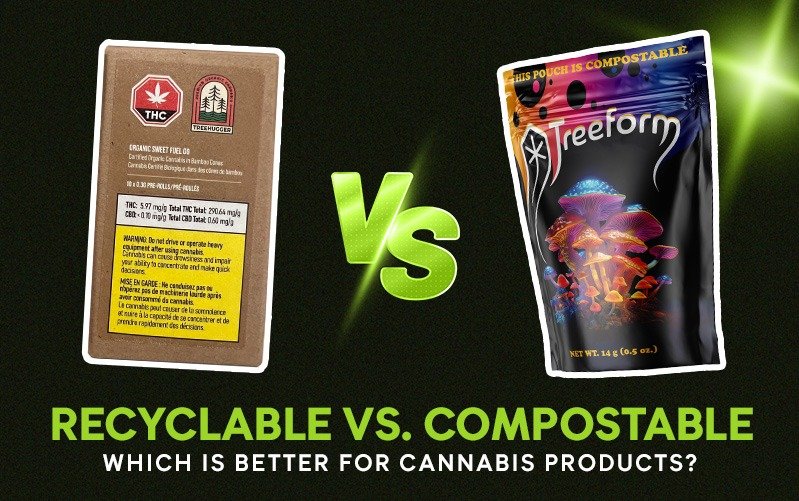
The debate between recyclable and compostable packaging has been ongoing for quite some time. Brands often confuse these terms with each other, but understanding the true meaning of both is crucial for selecting the right eco-friendly packaging.
Choosing between recyclable and compostable packaging can be a tedious task, as you weigh both the pros and cons. Knowing the right one that will work best for your business and the target audience’s requirements is a must.
In this blog, we will help you decide which one will work best for your brand.
Recyclable packaging is the process of collecting, processing, and shaping packaging into new materials after its initial use. Examples of recyclable cannabis packaging are glass jars, paperboard, and cardboard packaging solutions.
The recyclability of cannabis packaging not only depends on the material itself; it’s also about recycling infrastructure or process. Some materials, like multi-material packaging demands separation process before their initial use.
Now, if we talk about compostable packaging, this type of packaging is designed to break down into non-toxic components. These materials return as nutrient-rich soil rather than being processed into new materials. Bagasse and mushroom packaging are two main examples of compostable cannabis packaging.
When comparing the environmental impact of both, some things need to be considered in terms of differences.
The resource composition of recyclable materials often requires more energy but can be used multiple times. On the contrary, compostable materials often require less energy but can be used for single time before composting.
The end-of-life processing procedure is also different. Recyclable packaging depends on proper processing facilities. On the other hand, for compostable processing, brands must have access to industrial facilities that are not available in all regions. ‘
Lastly, there is a comparison in carbon footprint based on material type, transportation distance, and manufacturing process. For example, heavier compostable films may have higher transportation emissions as compared to heavier glass containers.
We know it is hard to decide between recyclable vs. compostable, but don’t worry, we guide you on which one to choose. Look for product requirements or needs, as some products may require the barrier properties that only recyclable materials can provide.
The second thing that you should look for is local infrastructure. Research about the waste management systems in your region or target market. If industrial composting is not available in your region, recycling processes are the best option.
Consumer education and cost considerations should also be considered. Check which procedure provides better opportunities for consumer education. Recyclability costs less than compostable packaging, so consider this factor too earlier.
Recyclable vs. compostable cannabis packaging? It all depends on the product’s nature, target audience requirements, and brand goals towards eco-friendly packaging. Both work best, and each has its own pros, cons, limitations, and challenges.
The Cannabis Boxes deals in all types of eco-friendly packaging solutions. Moreover, we have an expert team that guides brands on how to achieve sustainability goals by going for eco-friendly packaging. Contact us anytime for more packaging-related tips or valuable suggestions.
5 Types of Cannabis Packaging: Which One Is Right for Your Product? Jan 10, 2026
Recyclable vs. Compostable: Which is Better for Cannabis Products? Dec 29, 2025

5 Festive Cannabis Packaging Trends Dominating Christmas Sales Dec 18, 2025

How Custom CBD Cosmetic Boxes Boost CBD Beauty Sales? Dec 06, 2025